

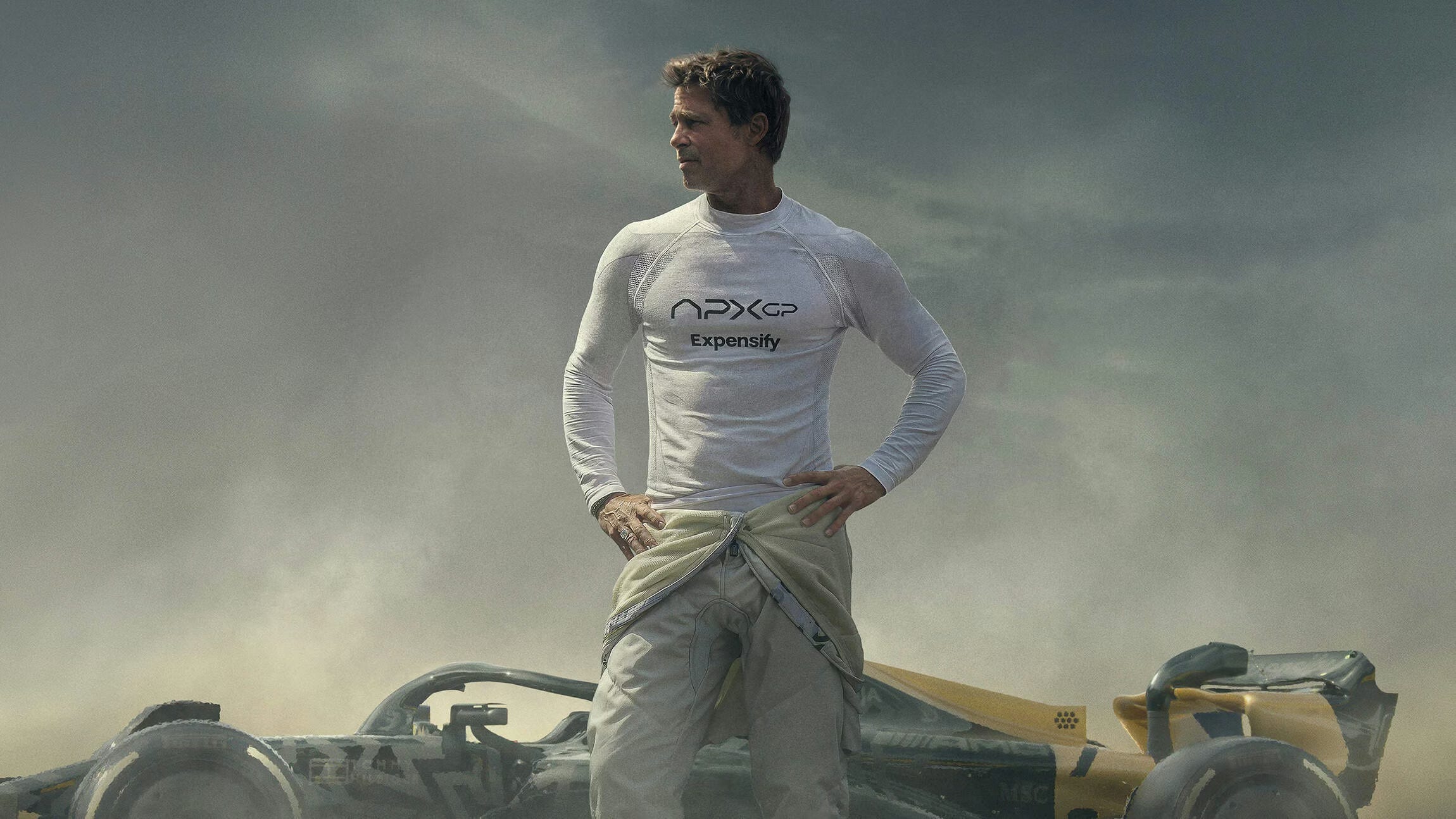
To say I was pumped about F1: The Movie coming out this summer would be an understatement. I grew up watching Formula 1 back in France, starting with the Prost-Senna era. As a movie buff, I also knew that having Joseph Kosinski direct, and Brad Pitt star as the aging pro mentoring the young hotshot, basically meant we were going to get Top Gun: Maverick on wheels. Add in Sir Lewis Hamilton (7-time F1 world champion and 🐐) as a producer for good measure, and it was, to channel F1 commentator David Croft, “lights out and away we go” to the closest multiplex on opening day.
By the time the title credits started rolling and Hans Zimmer’s F1 theme kicked in at the 12m30s mark, I was locked in.
That wideshot of Silverstone... perfection. 👌🏽
“Apple Originals Films Presents”... our boy Tim Apple is cooking with this one.
“A Jerry Bruckheimer Production”... let’s go! 🚀
The camera pans to our first look at the gorgeous APXGP car... As it zooms in, the whine of the F1 engine grows, and that’s when the drum snare kicks in... chef’s kiss. 👨🏽🍳💋
The tracking shot follows the car as it hurtles through a straight, to reveal:
“Expensify/A Joseph Kosinsky film”... Wait... What?
Ok, so that’s not what was actually on screen... but for a beat, it’s all I could see: Expensify’s logo directly under the director’s name and taking up way more visual space. As the saying goes, you can take the man out of B2B marketing (and to the movies), but you can’t take B2B marketing out of the man.
Expensify. The expense management software? Really? I was floored... then impressed. By the time the title sequence ended, I’d counted 20+ more Expensify logo hits. These were full-view impressions of their brand on the driver’s helmet, the car’s sidepods, rear wing, and halo, as well as on the race suit and team shirts of everyone from the fictitious APXGP racing team. Factoring in the movie’s global audience of 12M+ during its opening weekend, that was over 240M total impressions of Expensify’s brand served up on a global stage in the first 160 seconds alone!
In what is on track to be the highest-grossing sports movie of all time ($632M globally at the box office), about an elite sport that attracts over a billion dollars in annual brand sponsorships to reach a coveted audience of 800M global fans, Expensify managed to place itself front and center. The kicker? Unlike typical product placement, theirs felt organic throughout because, like in real F1, they were APXGP’s title sponsor.
The marketer in me had one burning question: How did they pull this off, and more importantly, why didn’t anyone else think of it first?
Applying the perfect undercut
Sponsoring Formula 1 is not cheap. Companies pay on average $50M to be team title sponsors. It’s estimated that Oracle pays over $90M a year to sponsor Red Bull Racing, one of the sport’s leading teams. The signal-to-noise ratio is also challenging from an ROI perspective. In any given race, viewers are bombarded with hundreds of logos, yet only get a fleeting glance at most of them. According to Nielsen Sports, 58% of F1 fans can’t recall more than two sponsors on a given car.
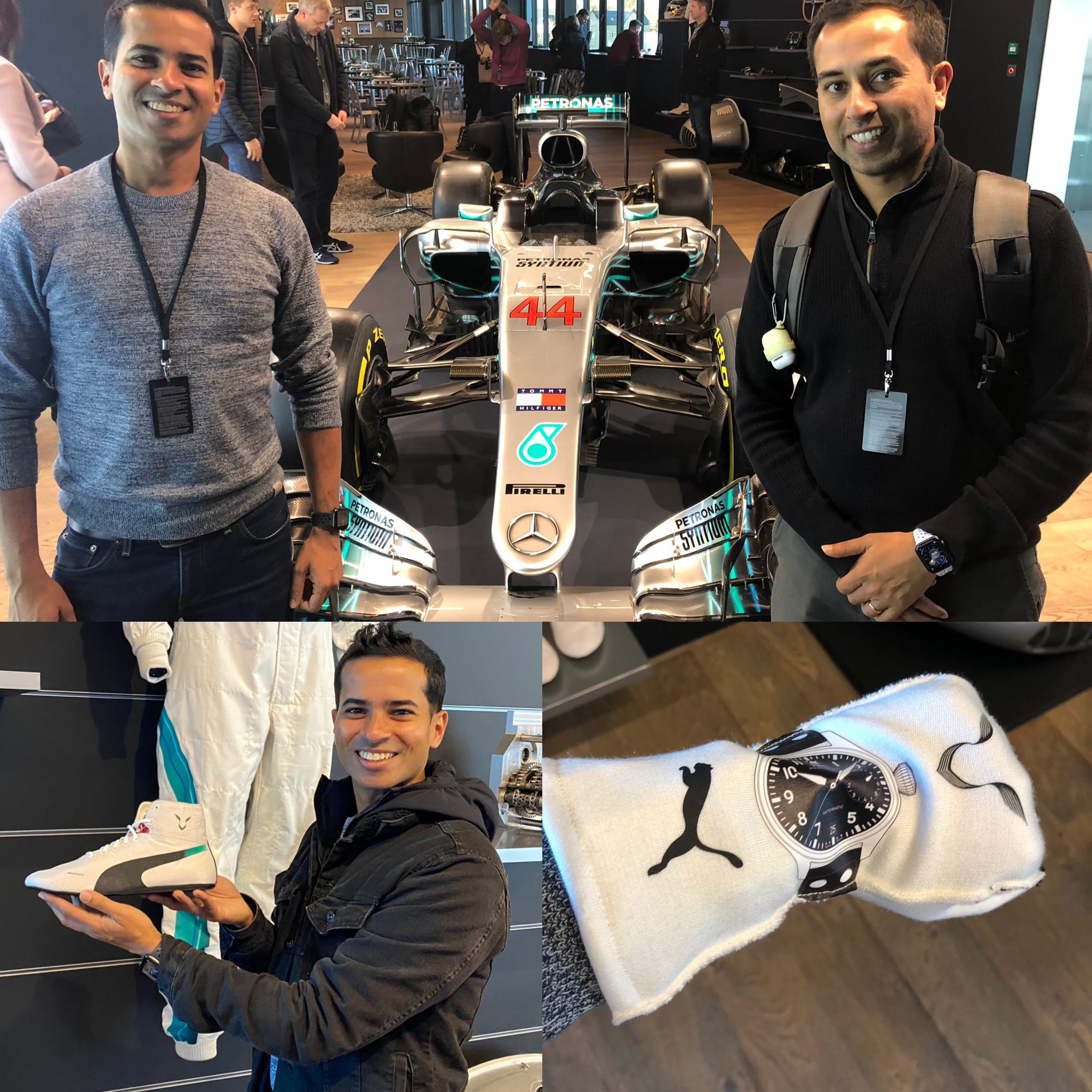
I would know. I led product marketing at WeWork when we considered sponsoring F1 in 2019. It was a sensible play at the time, given the hypergrowth and hyperawareness we were experiencing. Netflix’s Drive to Survive had just debuted and was already garnering buzz. We also knew the sport appealed to the global mix of ambitious startup founders and incumbents looking to up their cool factor, which was at the heart of our marketing. We had executive support, and so the only matter before us was which car and team to sponsor... that is, of course, until we famously ran out of money.
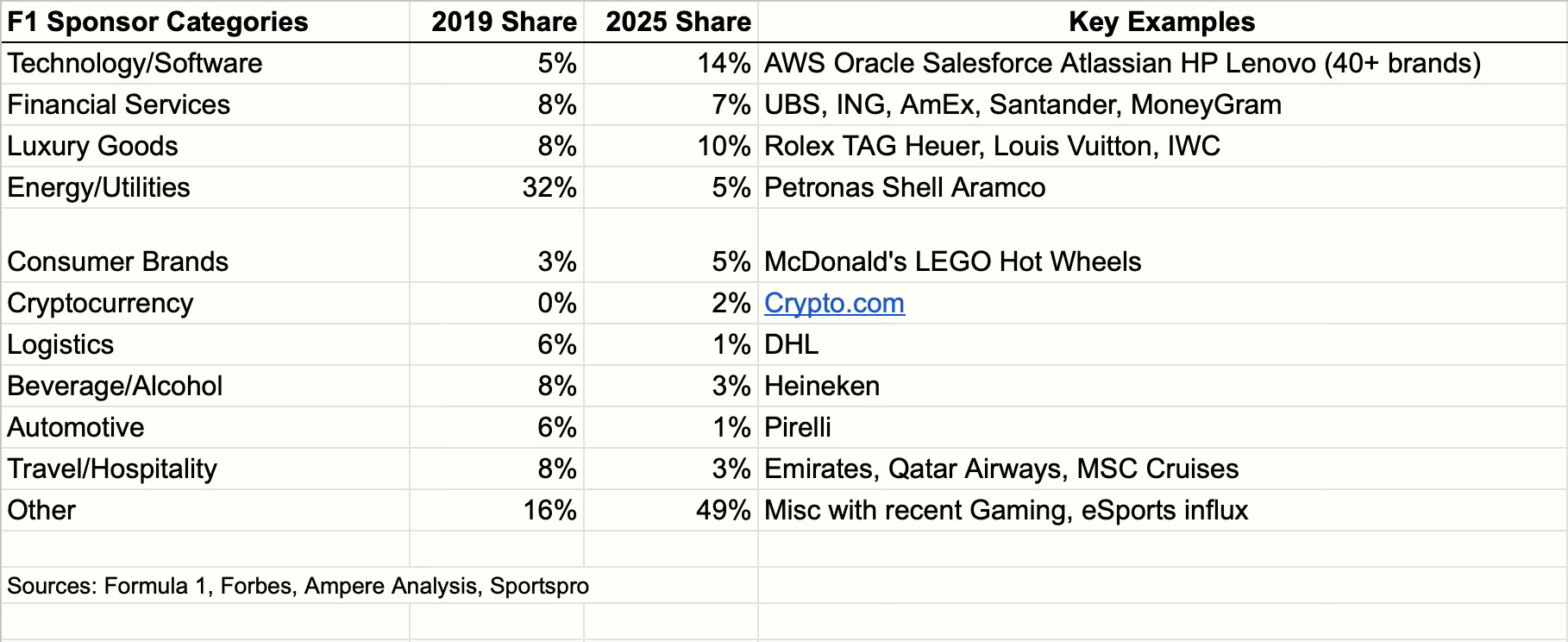
It was a bummer in more ways than one, believe me, because WeWork would have clearly stood out in a field of sponsors dominated by automotive, oil, gas, tire, and logistics brands (~50% of sponsorships in 2019). Critically, we would also have staked our claim early in a sport about to take the world by storm. It wouldn’t just have been a bold brand play, but—to use an F1 analogy—the perfect marketing undercut.
In F1, an undercut is a pit-stop strategy in which the chasing car pits earlier than the car ahead, aiming to leapfrog it after both cars stop. So while your rival stays out on their current racing strategy, you make an early move they don’t see coming, like pitting for different tires or less fuel. You then go and try to set faster laps to gain an advantage. By the time your rival reacts and pits, you’ve won track position.
Taking the undercut comes in handy in races where overtaking is difficult, or when you know you have a competitive car that can take on rivals if given the chance. Swap out the terms “races”, “overtaking”, and “car” with “markets”, “attaining awareness”, and “product” in the previous sentence, and you can see why executing an undercut is also valuable in marketing.
But here’s the thing: in both cases, you have to commit to the undercut before you know it will work. Success requires accepting uncertainty. And while we didn’t get to execute our undercut at WeWork with a real-life F1 team, watching Expensify execute theirs—with a fictional team, no less—made it clear they were ready to take exactly that kind of bet. It’s that appetite for risk that makes it a remarketable, because it’s what separates great marketing from safe marketing.
In a market where everyone’s optimizing for the same thing, asymmetry beats efficiency.
Built for combat
Midway through the movie, Brad Pitt tells his lead engineer, played by Kerry Condon, “We need to build our car for combat,” because he realizes APXGP has to fight their competition where they least expect it: in the turns.
By mid-2022, Expensify and its CFO, Ryan Schaffer, were facing a combat situation of their own. The company had IPOed a year earlier but saw its market cap decline by 72% to $788M and a slowdown in revenue growth.
Headwinds came from two directions. At the macro level, the entire SaaS economy was in free fall due to rising interest rates. Tech was about to enter a nuclear winter of layoffs and belt-tightening, putting Expensify’s seat growth and customer activity at risk. Competition was also stiffening. TripActions (soon to rebrand to Navan) had just raised another $300M for their Series G—pushing their valuation to $9.2B—and were aggressively expanding into expense management. Meanwhile, SAP Concur remained the dominant incumbent in the enterprise space, with 85M users and deep pockets.
Expensify needed to take a big swing. Luckily, they knew how.
In 2019, the company spent $15 million on Super Bowl advertising, including a 30-second spot featuring rapper 2 Chainz, actor Adam Scott, and a $200K ice-sculpted Lamborghini. The commercial went viral, generating $62 million in earned media, a 1,000% spike in sign-ups, and even spawning a music video that reached #1 on Vevo’s US Hip-Hop chart.
This unorthodox approach of wanting to be “part of the culture” came from Expensify’s leadership team, including Schaffer. Because Expensify sells, in his words, “business software to consumers who sell us to their boss”, orchestrating big brand moments that fuel water-cooler talk was worth it. The Super Bowl worked because it’s the one time of the year people want to see an ad, and their spot earned them a knock-on awareness effect that lasted the next 9 months.
But for this next move, Schaffer and the executive team wanted to swing for the fences. They also wanted a unique way to reach more people worldwide, including decision-makers. They briefed their agency partner, Alto, on targeting “something on the scale of the Super Bowl but not the Super Bowl again”.
“We can’t if we don’t try.”
Together with Alto’s Chief Creative Officer, Hannes Ciatti, they explored entertainment partnerships, including scripted shows and original content, where Expensify could be woven into popular culture. But it was only when they heard that Apple was seeking $40M in partner sponsorships for its upcoming F1-themed movie that the opportunity to make a splash came into focus.
F1 was now mainstream, and some of the world’s biggest brands, including enterprise SaaS companies, flocked to sponsor it. Strangely enough, none of them competed with Expensify. At a time when every SaaS company was entering cost-cutting mode, the opportunity to become the title sponsor of a fictional F1 team, at a fraction of what it cost in the real world, wasn’t just contrarian. It was a calculated risk, but one that could yield dividends. They took the undercut.
It’s estimated that Expensify committed $10-20 million—roughly 6-12% of their annual revenue at the time—to sponsor the fictional APXGP F1 team, something for which there was no precedent. Payments were to be made over multiple years, but when the expense hit their books in early 2025, Expensify admitted on an earnings call that they were bullish about what could be “one of the best brand placement opportunities ever.”
The movie opened on June 27, 2025.
Snagging the pole
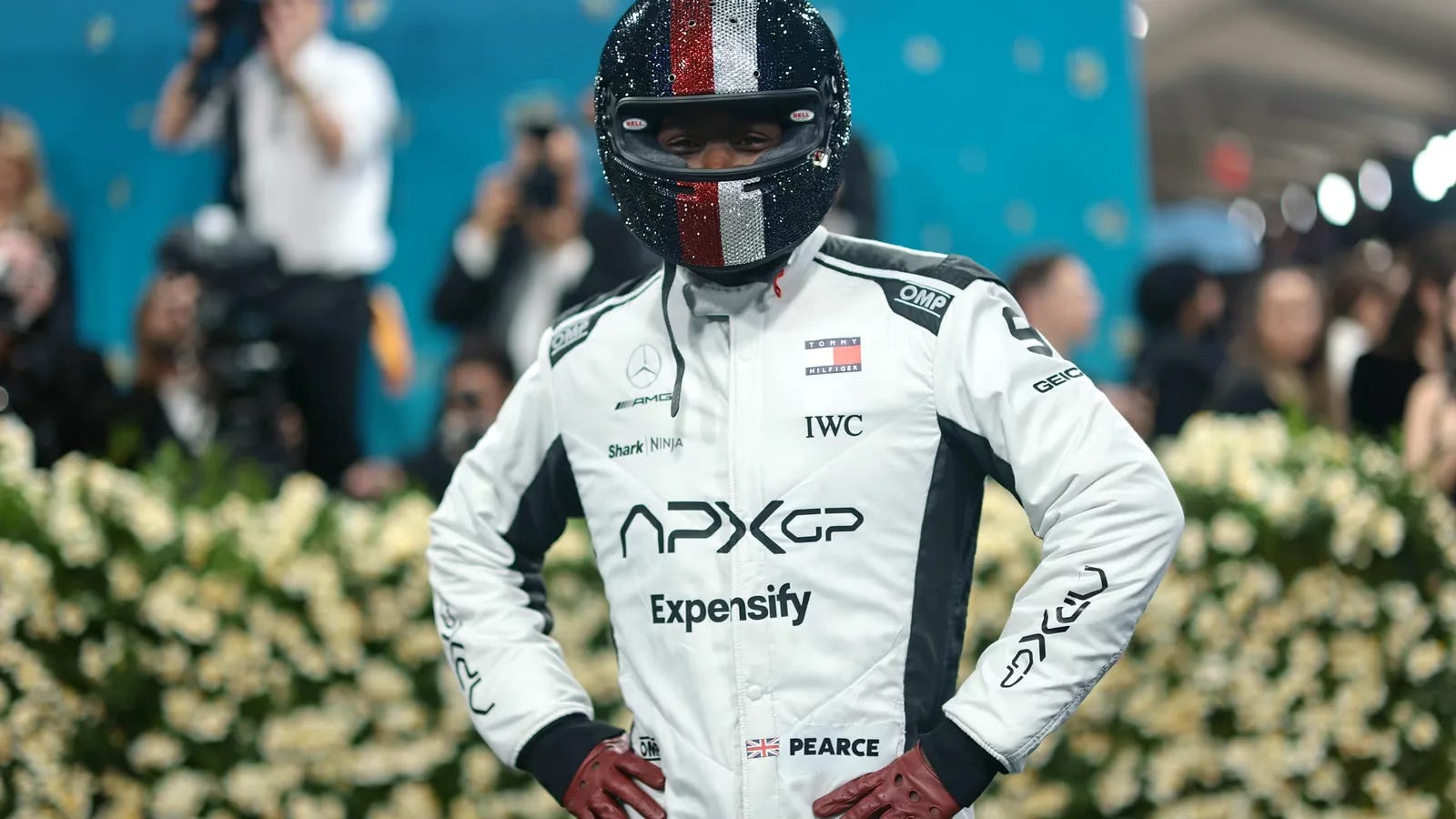
The numbers were staggering. According to brand tracking firm Concave, Expensify secured over $100 million in earned media value from the theatrical run alone. At the Met Gala, co-star Damson Idris wore his APXGP race suit on the red carpet a month before the film’s release, sparking millions of impressions and a 4X spike in sign-ups in a single night.
Expensify also benefited from a multiplier effect as APXGP’s title sponsor, the same way real sponsors would, and then some. Any marketing, tie-in, or companion media that featured elements of the car, team, or the cast in costume gave Expensify an added impression they didn’t pay for. Apple heavily promoted the movie across multiple channels. Expensify was in the Don Toliver/Doja Cat music video for “Lose My Mind”. Heineken ran a spot featuring Pitt and Idris sipping beers in their uniform—they never spoke to Expensify about it.
But that was the bet, wasn’t it? Shortly after the movie’s debut, Schaffer said in an interview, “We didn’t know this was going to happen, but we hypothesized that it would.”
By Q2 2025 earnings, Expensify reported a 50% increase in overall brand awareness, with a 350% surge among 18 to 24-year-olds. The film didn’t just perform at the box office; it also earned plaudits for everyone involved. It is now Brad Pitt’s highest-grossing film as a leading man. It is nominated for four Academy Awards, including Best Picture, and months after its theatrical run, it became the most-streamed movie on Apple TV+.
Compare that to Expensify’s Super Bowl campaign results. For the same spend, the F1 movie nearly doubled earned media value and delivered 35+ minutes of integrated screen time, compared with a single 30-second spot that typically competes with 50+ other advertisers for attention.
Or compare it to festival sponsorships like Cannes, where brands like Pinterest, Spotify, and Meta pay for activations that generate $10–30M in media impact value, but compete for visibility against dozens of other sponsors without the title dominance Expensify secured.
But here's the real difference: those activations are ephemeral. A Super Bowl ad lives and dies in 30 seconds. A festival sponsorship lasts a weekend. This film will stream indefinitely on Apple TV+. Every rewatch, every "I love this part" recommendation, every viewing party years from now delivers another brand impression Expensify doesn't have to pay for again.
By betting on F1: The Movie, Expensify didn’t just evolve their playbook. They got dibs on a less crowded battlefield that offered better positioning and more surface area for their brand to shine.
Sometimes the most valuable marketing insight isn’t about creativity or execution. It’s knowing when the race has changed, and having the courage to bet accordingly.
Most Remarketable: What brands and startups can take away from Expensify’s playbook
The Asymmetry Play
Expensify understood early on that a big and contrarian swing can pay dividends. Their Super Bowl ad back in 2019 stood out for all the right reasons. Committing 6-10% of their revenue on F1 took cojones, but in a market where everyone’s optimizing for the same thing, asymmetry beats efficiency.
In late 2022/early 2023, when better-capitalized competitors were cutting costs, Expensify bet big on a cultural moment nobody else saw coming. You can bet that even Apple and the filmmakers had the jitters on whether the movie would perform. But that’s the thing with asymmetric bets: the risks are real, and you have to commit before you know they will work. But the upside can pay dividends: if it lands, you own the race story or, in this case, the marketing narrative, while leaving your competitors in the dust.
Buying Track Position When Others Won’t
In intensely competitive markets, risk-taking isn’t reckless—it’s strategic. Done right, it’s a unique chance to seize and frame the narrative at your competitor’s expense or to capitalize on their absence or silence.
Anthropic’s preview of their Super Bowl ads this week, which were feral and thinly-veiled takedowns of OpenAI’s decision to bring ads into their product, wasn’t just timed right; it was a calculated risk that earned them track position/awareness ahead of OpenAI airing their creative at the Super Bowl this week. A classic undercut.
Least Remarketable: Pitfalls to Avoid
An outcome that’s out of your control
For all its success, the reality is that Expensify’s strategy was 100% dependent on exogenous variables. The movie had to be great. Critics had to love it. Audiences had to show up on opening weekend. Brad Pitt’s star power still had to matter. Expensify controlled none of that, and that was always the inherent risk of an undercut strategy. If F1 had bombed, the play would have been a write-off, and we wouldn’t still be talking about it, except maybe on Reddit F1 channels.
The Conversion Lag
As of this writing, Expensify’s Q4 earnings have yet to be shared. Yes, the movie delivered spectacular awareness metrics, but did that convert into new paying customers? Back in June of last year, Schaffer told Sports Business Journal, “ultimately, we want this to turn into revenue. The jury is still out on that.”
That’s not an easy thing to admit in the open as an executive, let alone tell your board, given the spend. But here’s what Expensify did to mitigate this, which other brands taking similar bets can do as well. They learned from the Super Bowl campaign that a spike in sign-ups required retooling behind the scenes with their marketing team to better exploit and manage the less-than-MQL-ish quality leads. Faced with the potential for millions of sign-ups coming from the movie, they completely redid their sign-up flow and user education. Conversion may still be probabilistic, but qualification is deterministic.
“Create your own breaks.”
I’d be remiss if I didn’t come back to my original question: why didn’t anyone else jump on this opportunity the way Expensify did?
We may never know. But it’s more than likely that Apple shopped more than just one brand. I could count on one hand the number of enterprise SaaS players for whom this would have/should have been a no-brainer.
The answer isn’t a lack of creativity. It’s an appetite for risk. When you have $9.2 billion in valuation like Navan, or 85 million users like SAP Concur with decades of enterprise dominance, the last thing you do during a market downturn is bet 6-12% of revenue on a fictional racing team in a movie that might flop. You optimize. You cut costs. You wait for the market to stabilize.
As for the brands in other categories that passed on F1, whether for risk aversion, brand value reasons, or simply not seeing the opportunity, they didn’t just avoid a risky bet. They handed Expensify an uncontested lane to gain awareness, cultural relevance, and strategic positioning while everyone else went dark.
Expensify’s F1 bet is a remarketable not because it worked—though the early awareness numbers suggest it might—but because the company was willing to accept uncertainty when their competitors were not. Sometimes the most valuable marketing insight isn’t about creativity or execution. It’s knowing when the race has changed, and having the courage to bet accordingly.
Love this Indy!
Another awesome edition of The Remarketables Indy! Love insights into F1 and intersection to product marketing 🚀